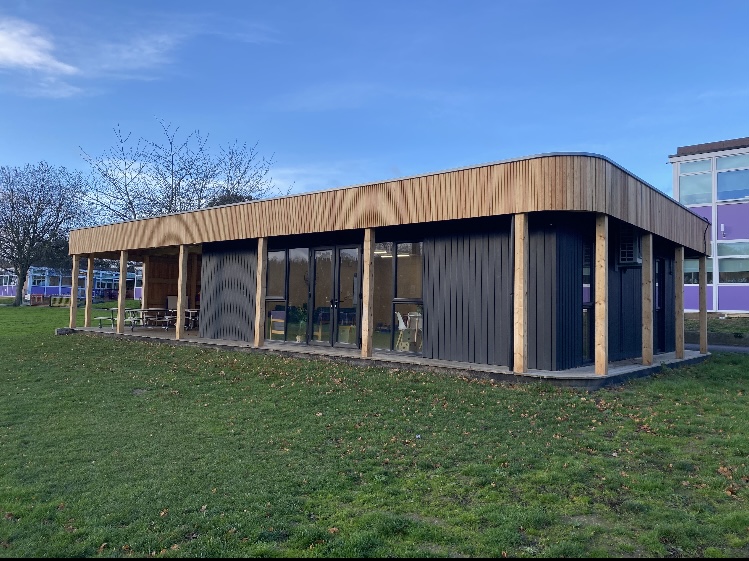
Design that teaches: how learning spaces shape wellbeing and performance
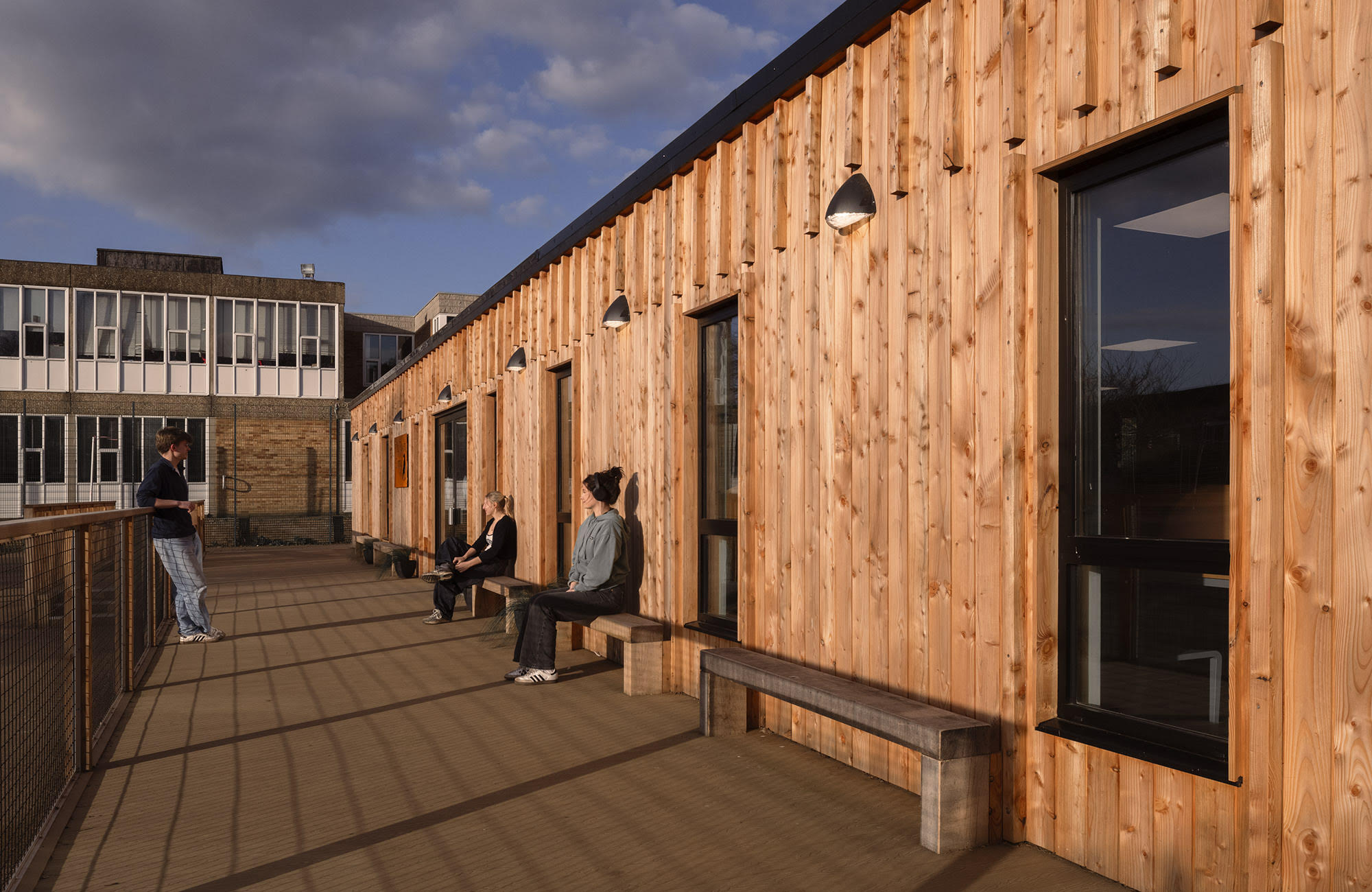
Everyone remembers a bad classroom.
The one with windows that couldn't open in July. The portable unit where condensation ran down the walls in January. The room where the strip lighting buzzed constantly and the acoustics turned every lesson into an endurance test for teacher and pupil alike.
We remember these spaces not because we're being precious about comfort - but because they made learning harder. They made teaching harder. And the evidence now tells us that the impact of poorly designed learning environments goes far deeper than discomfort.
The physical spaces where children learn are not neutral. They are active participants in how well learning happens.
What the evidence tells us
The relationship between school design and learning outcomes has been studied seriously for over two decades. The findings are consistent, and for anyone responsible for school buildings, they are difficult to ignore.
A landmark study by the University of Salford - one of the most comprehensive of its kind - tracked 3,766 pupils across 153 classrooms and found that the physical environment accounted for a 16% variation in learning progress over a single academic year. Not teacher quality, not curriculum, not socioeconomic factors - the room itself.
The specific factors that mattered most were:
- Naturalness - air quality, natural light, and temperature
- Individualisation - the degree to which the space could be owned and personalised by its occupants
- Stimulation - the right level of visual complexity; neither too sparse nor too cluttered
Separate research from Harvard's T.H. Chan School of Public Health found that cognitive function scores were 61% higher in well-ventilated environments compared to conventional ones. Carbon dioxide levels - which rise quickly in poorly ventilated classrooms - were directly linked to reduced decision-making ability and slower information processing.
On thermal comfort, studies consistently show that learning performance begins to decline when classroom temperatures rise above 20–22°C. In poorly insulated buildings - including many temporary modular units - temperatures in summer regularly exceed 28°C.
These are not marginal effects. They represent the difference between a classroom that works for its pupils and one that quietly works against them.
The five design factors that matter most
Understanding what the research says is one thing. Knowing what to actually look for - and what to ask for - in a learning space is another.
1. Light
Natural light is the single most impactful design variable in a learning environment. Studies consistently show that pupils in classrooms with greater natural light progress faster in reading and maths, report better mood, and have lower rates of absence.
The quality of light matters as much as the quantity. Direct glare is as problematic as insufficient light - the goal is diffused, consistent natural light that doesn't create hotspots or force pupils to squint at whiteboards.
In design terms this means: carefully oriented windows, roof lights where appropriate, and glazing specifications that manage solar gain without blocking daylight. It means not simply adding more glass, but adding the right glass in the right places.
2. Air quality and ventilation
CO₂ is the invisible enemy of the classroom. In a standard room with 30 pupils and inadequate ventilation, CO₂ levels can reach 2,000–3,000 parts per million within an hour. At those levels, research shows measurable reductions in concentration and cognitive performance.
The solution is not simply opening windows - though that helps. It is designing ventilation into the building from the outset, using passive ventilation strategies that maintain fresh air flow without creating draughts or noise, and specifying buildings with the airtightness and mechanical ventilation systems that maintain air quality year-round.
3. Acoustics
Poor acoustics are one of the most consistently underestimated problems in school buildings. Research by the Association of Noise Consultants found that children in noisy classrooms spend significantly more cognitive energy simply processing what is being said - leaving less capacity for actual learning.
For children with hearing difficulties, EAL pupils, or those with SEND needs, poor acoustics can make a classroom functionally inaccessible regardless of how good the teaching is.
Good acoustic design means appropriate reverberation times, sound absorption in ceilings and walls, and - critically - buildings with sufficient mass and insulation to reduce intrusion from external noise sources.
4. Thermal comfort
A classroom that is too cold in winter or too hot in summer is not just uncomfortable - it is cognitively demanding. The body's effort to regulate temperature competes directly with the cognitive resources available for learning.
High-performance insulation - as delivered by SIPs construction - maintains stable internal temperatures year-round with minimal mechanical intervention. This is not a luxury specification. It is the baseline requirement for a room that can consistently support learning.
5. Materials and biophilic design
Biophilic design - the incorporation of natural materials, forms, and connections to the natural world - has moved from architectural theory to evidence-based practice over the past decade.
Research published in the Journal of Environmental Psychology found that exposure to natural materials and views of nature reduced physiological stress markers in children and improved sustained attention. Classrooms with timber surfaces, planting, natural textures, and views to green spaces consistently outperformed equivalent spaces finished in synthetic materials.
This is not about aesthetics. It is about the fundamental human response to natural environments - a response that is particularly pronounced in children, and particularly relevant in spaces designed for extended concentration.
The teacher wellbeing dimension
Any honest discussion of learning space design has to include teachers.
Teacher burnout is one of the most significant challenges facing UK schools. According to the National Foundation for Educational Research, over a third of teachers report that their physical working environment has a negative impact on their wellbeing. Poor air quality, uncomfortable temperatures, inadequate acoustic insulation, and spaces that feel institutional rather than human all contribute to a cumulative toll that affects retention, performance, and ultimately the quality of teaching pupils receive.
A well-designed classroom is not just better for pupils. It is better for the people who spend their working lives in it. Investing in the quality of learning spaces is, in the most direct sense, an investment in the workforce that delivers education.
How SIPs and biophilic principles work together
At Eco Classrooms & Nurseries, the design principles that emerge from this research are not add-ons or upgrades. They are the starting point.
SIPs construction - our standard build method - delivers the thermal performance and airtightness that make stable, comfortable internal environments achievable without expensive mechanical systems. The panels themselves have a lower embodied carbon than almost any alternative, and the offsite manufacture process allows precision that site-based construction struggles to match.
Timber is central to everything we build. Not simply because it is beautiful - though it is - but because its biophilic properties are well-evidenced and its environmental credentials are genuine. Responsibly sourced timber sequesters carbon. It connects the interior of a building to the natural world. And it ages gracefully in a way that synthetic materials do not.
Natural light is designed in from the first sketch. Every building we create is oriented and fenestrated to maximise diffused daylight while managing solar gain - typically using a combination of carefully placed windows, rooflights, and external shading where appropriate.
Ventilation is passive where possible, mechanical where necessary, and always designed to maintain the air quality levels that the research consistently identifies as critical to cognitive performance.
The result is not a building that meets minimum standards. It is a building that actively supports the people inside it.
5 questions to ask when reviewing your learning spaces
Before your next refurbishment cycle, before the next budget conversation, before the next temporary solution becomes the permanent one - ask these five questions about every learning space in your school:
1. What is the CO₂ level in this room during a typical lesson? If you don't know, a simple CO₂ monitor (available for under £50) will tell you within an hour. Readings consistently above 1,500ppm indicate a ventilation problem that is almost certainly affecting learning.
2. Can every pupil in this room read the board without squinting or shielding their eyes? Glare from poorly positioned windows or inadequate artificial lighting is a common, easily overlooked problem that affects attention and eye strain across the school day.
3. What is the temperature range in this room across a typical year? A room that is comfortable in October may be unusable in July. If your building lacks the insulation to maintain stable temperatures, that thermal variation is having a measurable impact on learning.
4. Can a teacher at the front of the room be clearly heard at the back without raising their voice? If not, the acoustic performance of the space is below the threshold that supports effective teaching - and is placing an additional cognitive and physical burden on every teacher who uses it.
5. Is there any connection to the natural world from within this space? A view of green space, the presence of natural materials, or access to outdoor learning areas are not luxuries. They are design features with measurable impacts on stress, attention, and wellbeing.
If the honest answer to any of these questions concerns you, the space is not working as hard as it should be for the people inside it.
If you really don't know if a modular build is the right next step for you, read our guide.
Ready to think differently about your learning spaces?
The best time to consider these questions is before a build, refurbishment, or expansion - when the answers can still shape what gets created. At Eco Classrooms & Nurseries, every project starts with a conversation about how the space needs to perform for the people who will use it.
If you're planning additional space, an extension, or a replacement for an underperforming building, we'd welcome the conversation.

Sustainable Modular Buildings for Schools, Nurseries & Community Spaces
From nurseries and classrooms to multi-use community buildings, we design and build sustainable modular buildings across the UK, tailored to each site, built to last, and delivered with minimal disruption.


Explore Our Latest Insights
Discover innovative ideas for educational spaces.