How to get your Governors or Board to say YES to a new Modular Building
You know your school, nursery or organisation needs more space.
Maybe you're turning classrooms into storage rooms. Maybe staff are sharing offices the size of a cupboard. Maybe your nursery has a waiting list that stretches around the block, and nowhere to put the children.
The need is clear. The solution - a new modular building - is ready and waiting.
But first, you need to get the board on side.
Whether you're presenting to school governors, a MAT board of trustees, a nursery committee or a community organisation's leadership team, the challenge is the same: turning a practical need into a compelling, financially sound case that decision-makers can confidently approve.
This guide walks you through exactly how to do it.
Why Modular Buildings are an easier sell than you think
Before you build your case, it helps to understand why modular construction already works in your favour.
Unlike traditional builds, modular school buildings and nursery buildings offer:
- Fixed, predictable costs - no surprise overruns mid-project
- Fast delivery - most projects completed in 4–6 weeks on site
- Minimal disruption - around 850% of the build happens off-site
- Strong sustainability credentials - A+ energy efficiency ratings, lower running costs
- Permanence - these are not portacabins; they are high-quality, long-life buildings
For a governor or trustee whose job is to manage risk and protect the organisation's finances, these points matter enormously. Modular buildings reduce uncertainty - and reduced uncertainty makes approval easier.
Step 1: Start with the need, not the solution
The most common mistake people make when presenting to a board is leading with the product. Don't open with "we want a modular classroom." Open with the problem.
Governors and trustees are trained to scrutinise proposals. Give them the evidence first:
- How many pupils or children are currently over capacity?
- Which year groups or rooms are most affected?
- What is the impact on teaching quality, staff wellbeing or regulatory compliance?
- Is there a safeguarding or SEND concern that needs to be addressed?
- What happens if nothing changes - lost income, failed inspections, staff turnover?
Frame the problem in terms the board cares about: pupil outcomes, Ofsted readiness, financial sustainability and duty of care.
Once the need is established and agreed, the solution becomes much easier to introduce.
Step 2: Present the costs clearly and honestly
Boards distrust vague costings. Come prepared with realistic numbers.
For modular school buildings and nursery buildings in 2026, typical costs look like this:
Figures exclude VAT and professional fees. See our full modular classroom cost breakdown for more detail.
Critically, present the total cost of ownership - not just the upfront build cost. Modular buildings with high-performance insulation and energy-efficient design typically reduce heating and running costs by 20–30% compared to older buildings. Over a 10–20 year period, that saving is significant and worth including in your financial case.
Step 3: Show how it will be funded
This is often the moment a board moves from sceptical to supportive.
Most schools, nurseries and community organisations do not need to fund a modular building entirely from reserves. There are multiple funding routes available, and in many cases they can be combined:
For schools:
- Condition Improvement Fund (CIF) - capital funding from the DfE for academies, small MATs and voluntary-aided schools, covering building improvements, replacements and expansions
- School Condition Allowance (SCA) - allocated directly to larger MATs for condition and improvement works
- Basic Need and Local Authority Funding - for schools expanding to meet local pupil demand
- High Needs Capital Funding - specifically for SEND accommodation and specialist spaces
For nurseries and early years settings:
- Local authority early years capital grants - available in many areas to support expansion of registered childcare provision
- Charitable trust grants - many foundations support early years facilities, particularly in underserved areas
- Provider-led funding - some nursery chains and groups have access to internal capital for expansion
For community and multi-use buildings:
- National Lottery Community Fund - supports community infrastructure projects
- UK Shared Prosperity Fund - available through local authorities for community development
- Charitable and foundation grants - particularly relevant for healthcare-adjacent or social care organisations
For all settings:
- Leasing and finance options - spreading the cost over time without depleting reserves
- Phased builds - starting with one module and expanding later as funding allows
At Eco Classrooms & Nurseries, we regularly help clients identify which funding routes apply to their project and structure their build accordingly. It's worth having that conversation early — before you go to your board - so you can present a realistic funding plan alongside your proposal.
For a full breakdown of funding routes, see our guide: Funding modular classrooms and nurseries in 2026–27.
Step 4: Address the questions they will ask
A well-prepared board will push back. That is their job. Anticipate the questions before you walk in the room.
"Is this a permanent solution?" Yes. Modular school buildings from Eco Classrooms & Nurseries are permanent, purpose-built structures designed to last 60+ years. They are not temporary cabins or portacabins.
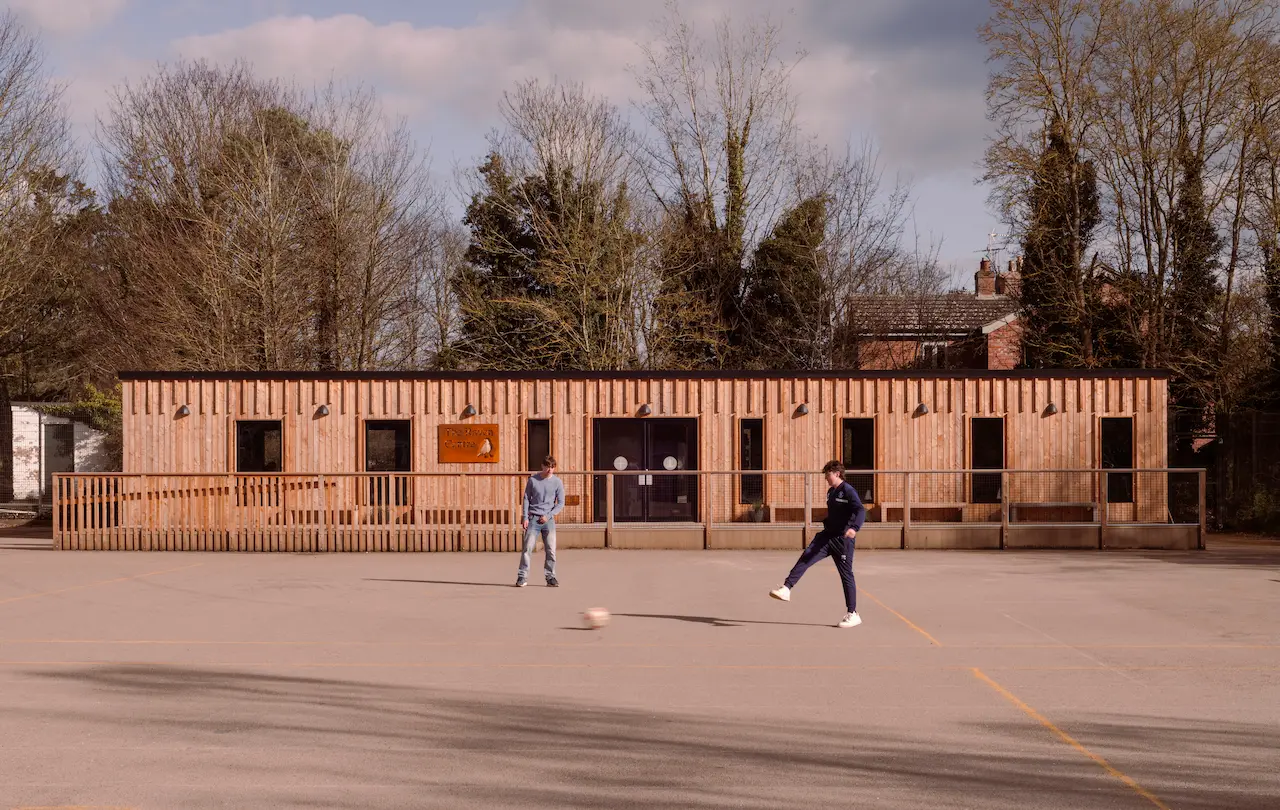
"Will it look right on site?" Modular buildings can be designed to complement existing architecture - matching materials, colours and proportions. Bring visuals if you can.
"What about planning permission?" Many modular projects qualify under permitted development rights, meaning full planning permission is not required. We can advise on this early in the process.
"How disruptive will the build be?" Significantly less disruptive than traditional construction. Because most of the build happens off-site, on-site installation typically takes days rather than months. Projects are routinely planned around term dates to minimise impact on pupils and staff.
"What if our needs change in five years?" Modular buildings can be extended, reconfigured or relocated. They offer a level of flexibility that traditional builds simply cannot match.
"Who else has done this?" Case studies and testimonials from comparable organisations carry real weight with boards. At Eco Classrooms & Nurseries, we have worked with primary schools, nurseries, MATs, sixth form centres, SEND settings and community organisations across the UK. We are happy to share relevant examples ahead of your presentation.
Step 5: Make it easy to say yes
The goal of your presentation is not just to inform - it is to remove barriers to approval.
A few practical things that help:
- Bring a one-page summary - governors are busy; a clear, concise summary document makes it easier to review and share
- Include a proposed timeline - showing when the project could be delivered, and how it fits around the academic or operational year
- Present two or three options - giving the board a choice (e.g. single classroom vs double block) puts them in control and reduces the likelihood of a flat refusal
- Be clear on the next step - rather than asking for full approval on the spot, ask for permission to proceed to a feasibility stage or initial consultation; smaller decisions are easier to make
At Eco Classrooms & Nurseries, we offer a free, no-obligation site consultation that can feed directly into your board presentation - giving you real costings, a proposed layout and a delivery timeline before you go into the room.
What happens after approval
Once your board or governors give the green light, the process moves quickly.
A typical modular project with Eco Classrooms & Nurseries follows these stages:
- Initial consultation - understanding your needs, site and budget
- Design and planning - bespoke design developed around your requirements
- Funding support - helping you navigate available funding routes
- Manufacture - off-site build in controlled conditions
- Installation - on-site assembly, typically completed in days
- Handover - ready to use, fully fitted out to your specification
Most projects are completed within 4-6 weeks of installation beginning.
Ready to start the conversation?
If you are building a case for a new modular classroom, nursery building or community space, we can help - whether that is talking through costs, identifying funding routes or preparing information for your board presentation.
Book a free consultation - no pressure, no obligation, just a clear conversation about what is possible for your setting.

Sustainable Modular Buildings for Schools, Nurseries & Community Spaces
From nurseries and classrooms to multi-use community buildings, we design and build sustainable modular buildings across the UK, tailored to each site, built to last, and delivered with minimal disruption.


Explore Our Latest Insights
Discover innovative ideas for educational spaces.