Modular vs Traditional Build for Schools: Full Comparison (2026)
Modular vs Traditional Build for Schools: Which Is Right for You?
At some point, every governor or business manager proposing a new building gets asked the same question by the board: "Why modular, and not just build it properly?"
It's a fair question, and it deserves a proper answer rather than a sales pitch. This guide compares modular and traditional construction directly, on the factors that actually matter when you're the one justifying the route at a governors' meeting: cost, build time, disruption, planning, lifespan and long-term value.
We've deliberately avoided this head-to-head framing in some of our other guides, because for a lot of schools "what problem are we solving" is the better starting question. But if you've already been asked to compare the two routes directly for a board paper, this is that comparison.
The honest starting point: both can be done well, and both can be done badly
A well-built modular building and a well-built traditional building can perform almost identically on quality, lifespan and finish. A poorly specified version of either can let a school down. The construction method itself isn't the guarantee of quality. The differences that matter are in cost predictability, programme length, and how much disruption your site and pupils absorb along the way.
Side-by-side comparison
On a straight per-square-metre basis, a well-specified modular building and a well-specified traditional building can land in a similar range. The difference that actually affects your budget is predictability. Because the bulk of a modular build happens in a factory environment, you're far less exposed to the weather delays, labour shortages and material price volatility that routinely push traditional projects over budget. Our classroom cost guide breaks down typical modular pricing in detail if you need figures for a board paper.
Traditional builds can also carry hidden costs that are easy to miss at the quoting stage: extended site security and welfare facilities for a longer programme, additional professional fees for a longer build period, and the cost of disruption itself, including temporary teaching arrangements if space is tight during construction.
Speed and disruption: the factor governors underestimate
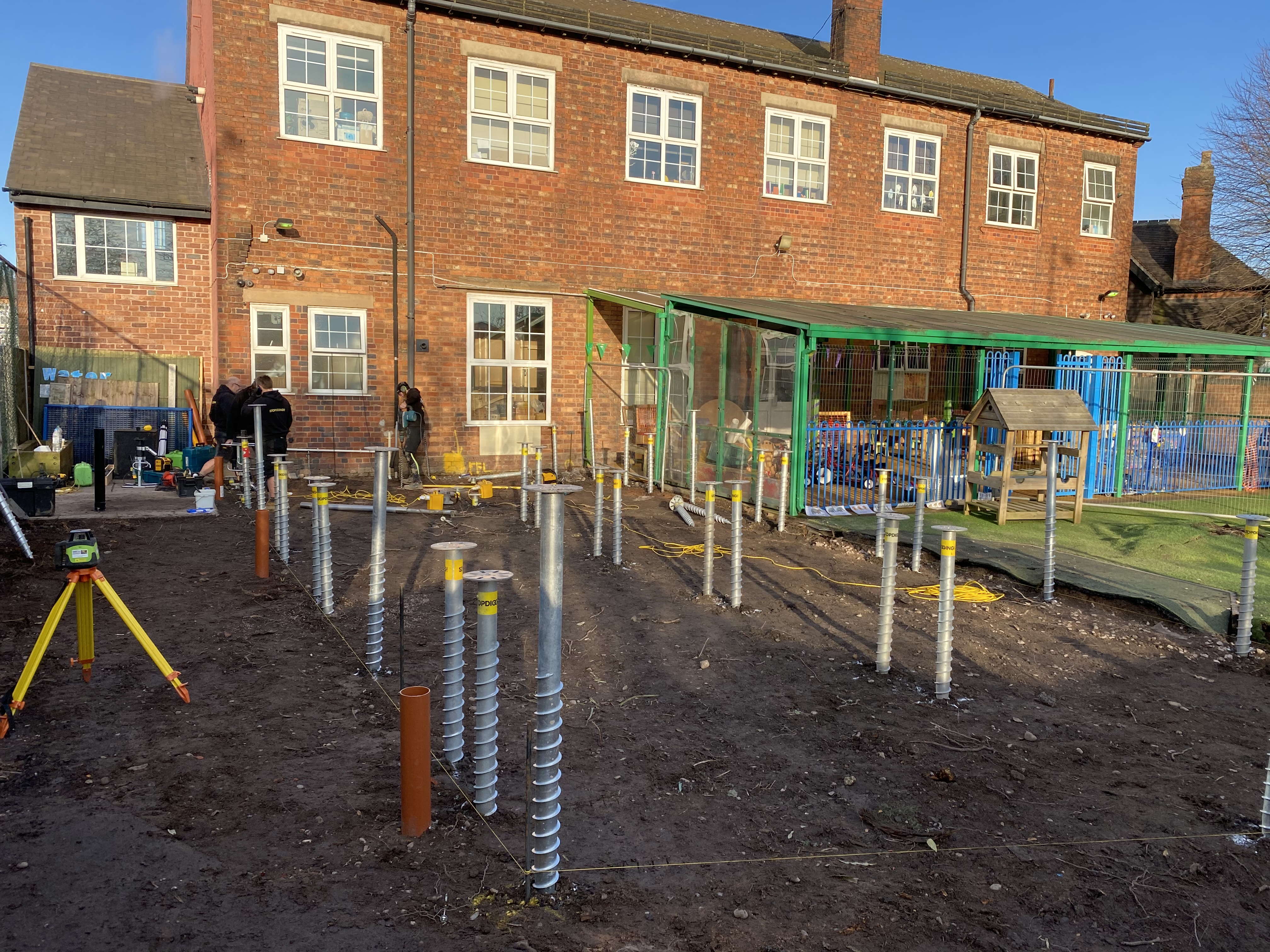
A traditional build on an occupied school site typically means 9 to 18 months of ongoing construction activity: deliveries, noise, dust, and access restrictions that affect how the site operates day to day. For a modular build, most of that disruption is compressed into a much shorter on-site assembly window, because the building itself is manufactured off-site while groundworks happen in parallel. Read more about exactly how long a modular classroom takes to build.
For schools with safeguarding considerations around extended contractor presence, or for nurseries where noise and access genuinely affect EYFS compliance, this isn't a minor convenience. It's often the deciding factor.
Quality and lifespan: addressing the "modular means temporary" myth
This is the objection that comes up most often in governor meetings, and it's based on outdated assumptions. Modular does not mean portable, demountable, or short-life. A SIPs-built modular classroom or nursery is constructed on permanent foundations, meets full UK building regulations, and is designed for a 60+ year lifespan, the same standard expected of a traditional build.
What it doesn't mean is a leased portacabin. Those are a different category entirely, with a different cost structure and a much shorter usable life. We've covered that distinction in detail in the hidden cost of temporary modular buildings.
When traditional construction is genuinely the better fit
Modular isn't the right answer for every project, and a supplier who tells you otherwise isn't being straight with you. Traditional construction tends to make more sense when:
- The new space needs to integrate structurally with complex existing fabric, such as a listed building or an unusual existing footprint
- The project is large and bespoke enough that off-site panelised construction loses its efficiency advantage
- Site access genuinely cannot accommodate delivery of pre-manufactured panels or modules
For most new classrooms, nurseries, extensions and standalone teaching spaces, none of these constraints apply, which is why modular has become the default choice for this kind of project across the sector.
Making the case to your board
If you're the one presenting this decision, the strongest case isn't "modular is cheaper" - it's that modular gives you more cost certainty and far less disruption, for a building that performs to the same standard over the same lifespan. That's the argument that holds up under scrutiny, because it doesn't oversell the method or dodge the genuine trade-offs.
For a structured way to put this in front of your governors or board, including how to frame costs, funding and return on investment, see our guide: how to get your governors or board to say yes to a new modular building. And if you want to stress-test whether modular is actually right for your specific project before you take it further, our seven questions guide is the next step.
If you're preparing a comparison for your board and want the numbers and timelines specific to your site, we're happy to talk it through with no obligation.
Get in touch and we'll help you build a case that holds up to real scrutiny.

Sustainable Modular Buildings for Schools, Nurseries & Community Spaces
From nurseries and classrooms to multi-use community buildings, we design and build sustainable modular buildings across the UK, tailored to each site, built to last, and delivered with minimal disruption.


Explore Our Latest Insights
Discover innovative ideas for educational spaces.