Modular Classrooms for SEND: Design Guide for Schools
The demand for SEND provision in the UK is not creeping upward. It is accelerating.
The number of pupils with an Education, Health and Care Plan increased by 11.1% between 2024 and 2025 to 483,000 - double the number in 2016. A further 1.3 million pupils receive SEN support without an EHCP, bringing the total number of school pupils in England with identified special educational needs to over 1.7 million - 19.6% of all pupils.
The buildings available to support those pupils have not kept pace. Mainstream classrooms were not designed with SEND in mind. Temporary units are worse still. And traditional construction timelines make expansion slow and expensive.
Modular construction offers a faster, more affordable, and - crucially - more designable alternative. But only if the building is genuinely designed for SEND from the outset. This guide covers what that looks like in practice, and what to expect from the process.
Why the built environment matters so much for SEND pupils
For neurotypical pupils, a suboptimal classroom is an inconvenience. For many pupils with SEND, it is a genuine barrier to learning - and in some cases, a source of significant distress.
Pupils with hearing impairments, communication needs, autism, ADHD, or speech and language difficulties are especially sensitive to noise. Background noise that neurotypical pupils barely notice can completely derail learning for neurodivergent children.
The same applies to lighting, temperature, and the visual complexity of a space. A room that is too bright, too loud, too unpredictable, or thermally uncomfortable creates a physiological stress response that makes learning almost impossible - regardless of what is being taught, or how well.
This is not a soft consideration. It is a design requirement. And it is one that modular construction - when done properly - is uniquely well-placed to meet.
What makes a modular SEND building different?
A well-designed modular SEND building is not a standard classroom with a few adjustments. It is designed from the ground up around the sensory, physical, and spatial needs of the people who will use it.
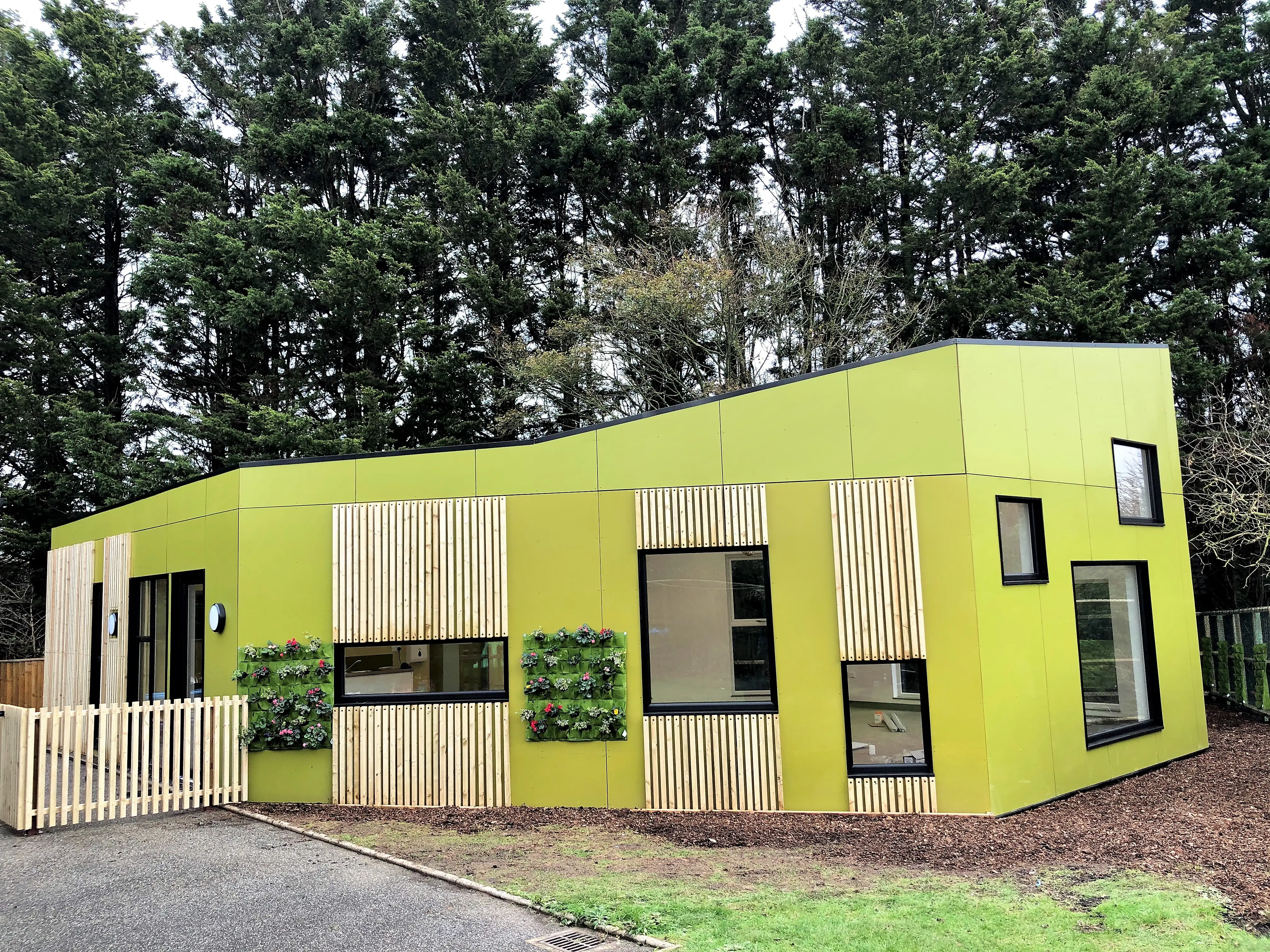
At Eco Classrooms & Nurseries, every SEND building is bespoke - whether it is a dedicated unit attached to a mainstream school, a standalone special school classroom, an early years nursery serving children with additional needs, or supported living accommodation for adults with SEND. The principles of good design apply across all of them.
Acoustics
Acoustic performance is arguably the single most important design consideration for SEND spaces. Building Bulletin 93 (BB93) specifies maximum indoor ambient noise levels of 35dB for classrooms, reverberation times not exceeding 0.6 seconds for teaching spaces, and minimum sound insulation standards between rooms and from external sources.
SIPs (Structural Insulated Panels) construction is particularly well-suited to meeting and exceeding these standards. The rigid insulated panel structure delivers high levels of sound insulation as standard, reducing both external noise ingress and sound transmission between rooms. Acoustic finishes - sound-absorbing wall panels, specialist flooring, and carefully considered ceiling treatments - can be incorporated at the design stage to further reduce reverberation.
Space per pupil
SEND spaces require significantly more room than mainstream classrooms. While a mainstream classroom might allocate 1.8-2.2m² per pupil, specialist SEND classrooms typically require 5.5-8m² per pupil depending on the level of need. This reflects the need for mobility equipment, therapy space, support staff, and the physical room for pupils to self-regulate.
Because every ECAN modular building is designed to a bespoke brief, space requirements are built into the design from day one - not retrofitted around a standard footprint.
Sensory-considered lighting
Harsh, flickering, or unpredictable lighting is a known trigger for sensory overload in autistic pupils and those with ADHD or sensory processing difficulties. Good SEND design prioritises:
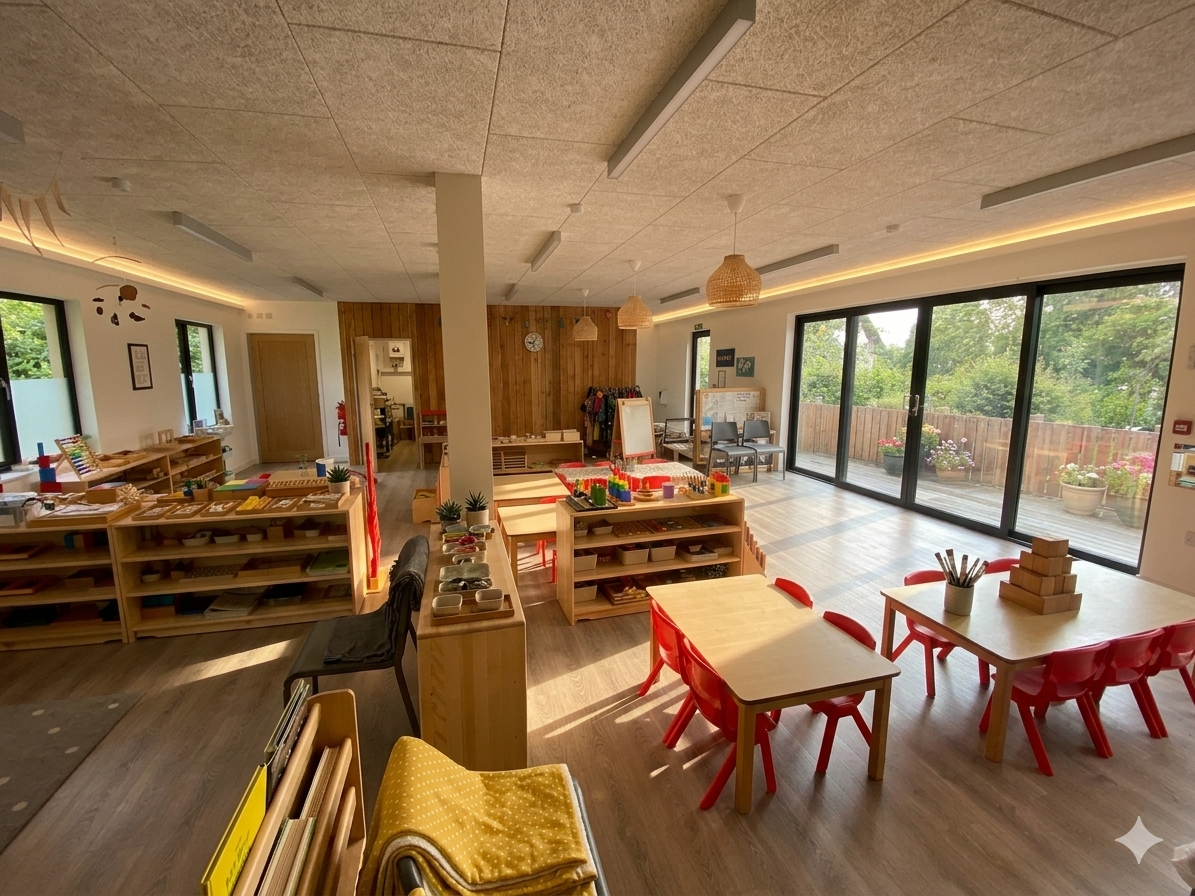
- Generous natural light through well-positioned, glare-controlled glazing
- Dimmable artificial lighting that can be adjusted to individual needs
- Avoidance of fluorescent strip lighting in favour of warmer, diffused sources
- Consistency of light levels throughout the space to avoid sudden contrasts
SIPs construction supports excellent thermal performance, which means larger glazed areas are possible without the energy penalty that would apply to a less well-insulated building.
Thermal comfort
Temperature regulation matters more than many designers realise. Pupils with sensory sensitivities frequently experience thermal discomfort more acutely than neurotypical peers. A building that is cold in winter, stuffy in summer, or inconsistent throughout the day creates a constant, low-level distraction that undermines everything happening inside it.
SIPs construction delivers a highly consistent internal environment year-round. The airtight, well-insulated envelope means the building responds predictably to heating and cooling, without cold spots, draughts, or the temperature swings common in older or temporary buildings.
Threshold-free access
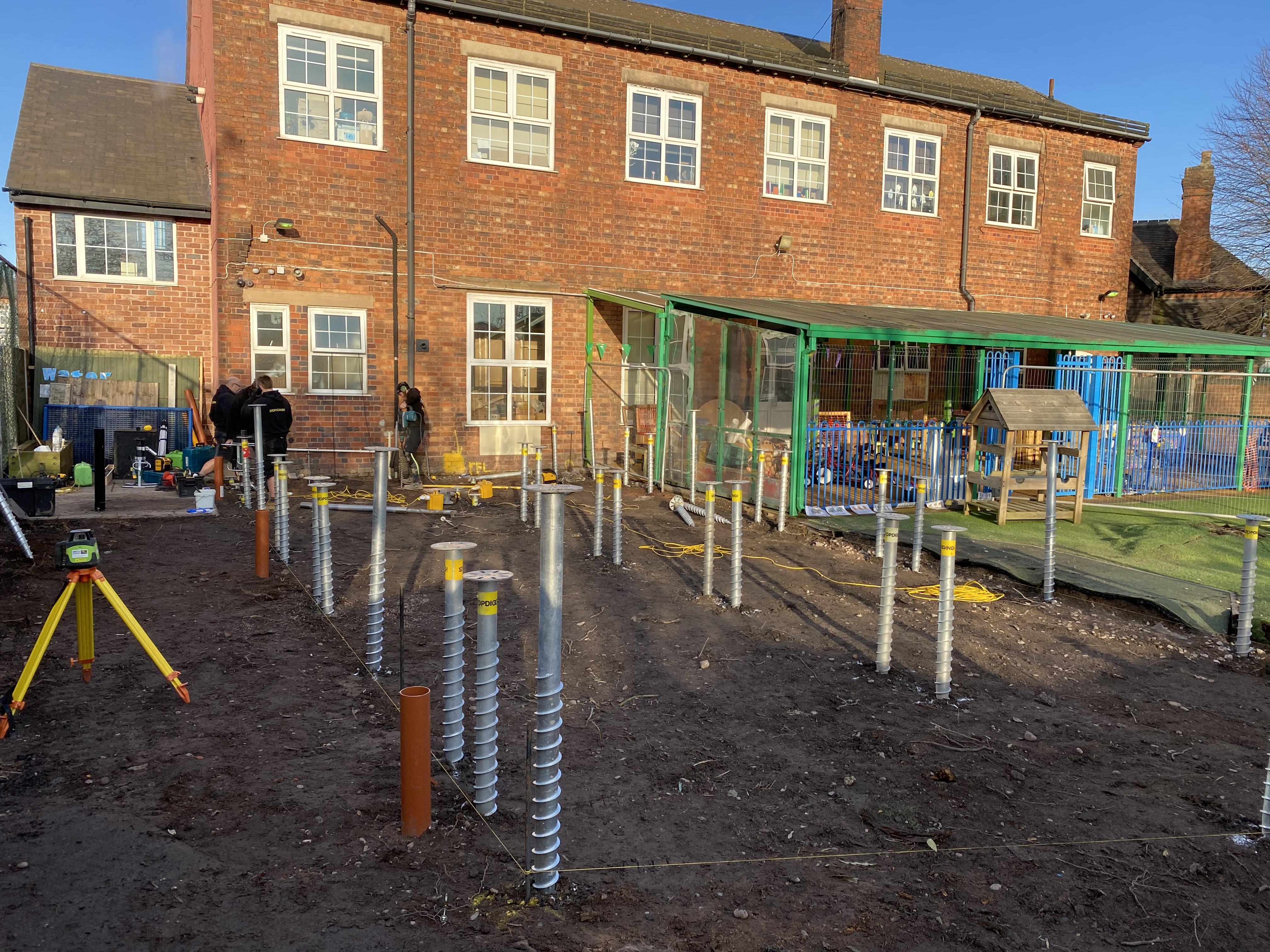
Ground screw foundations - ECAN's standard approach - mean the building sits level with the surrounding ground without the need for steps at the threshold. Combined with wide doorways, level flooring throughout, and DDA-compliant design, this ensures the building is genuinely accessible for pupils with physical disabilities or those who use wheelchairs and mobility aids.
Breakout and sensory spaces
Many SEND pupils need access to low-stimulation breakout spaces - somewhere to self-regulate, decompress, or receive one-to-one support away from the main teaching environment. These can be incorporated directly into the building's design as dedicated rooms or quiet zones, rather than being treated as an add-on. Secure outdoor spaces, designed to allow independent or supervised outdoor learning, can also be included.
Who is this relevant to?
Modular SEND buildings from ECAN are relevant across a range of settings:
Mainstream schools adding SEND provision. A dedicated SEND unit or inclusion base allows schools to provide specialist support on-site rather than relying on expensive external placements. The government has set aside £740 million to help build specialist provision in mainstream schools - a signal that on-site specialist spaces are expected to become standard, not exceptional.
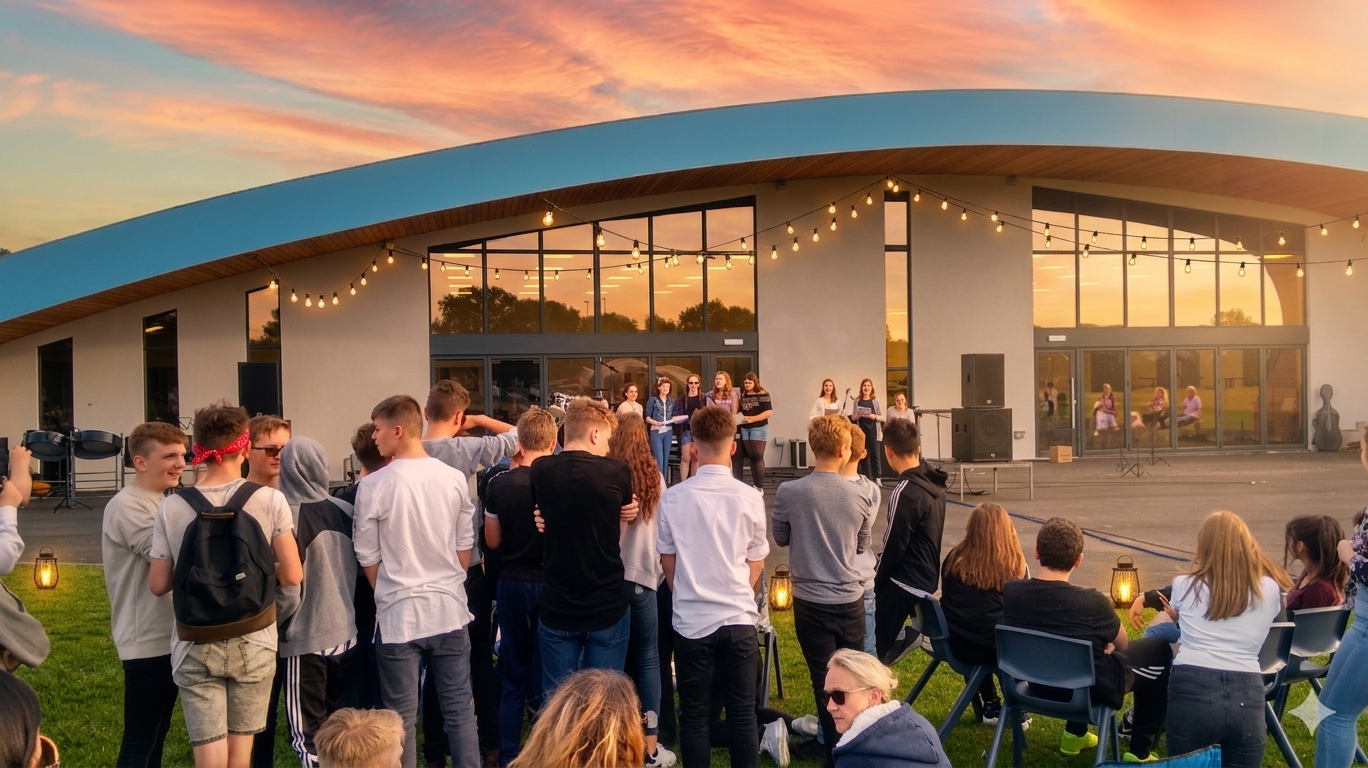
Special schools and early years settings. Where the entire building is designed around SEND, the design brief goes further - full sensory suites, therapy rooms, hygiene facilities, and highly specified acoustic environments. Our modular nursery buildings can be fully specified for early years settings serving children with additional needs from the outset.
Supported living and adult SEND provision. The same design principles that make a good SEND classroom - acoustic control, thermal consistency, sensory-considered lighting, threshold-free access - apply equally to residential and supported living buildings for adults with SEND. Modular construction is well suited to this context, offering bespoke layouts, fast delivery, and permanent structures that meet Care Quality Commission requirements.
Costs and timelines for modular SEND buildings
The cost and timeline of a modular SEND build follows the same general structure as any modular build, with some variation for the higher specification typically required.
For cost benchmarks and a full breakdown of what drives modular building prices, see our guide: how much does a modular school building cost?
For a full stage-by-stage timeline from enquiry to handover, see: how long does a modular building take to build?
In general terms, a modular SEND build is typically delivered in 12-24 weeks from start to finish - significantly faster than an equivalent traditional build, with far less disruption to a live school site. For settings where safeguarding and routine are paramount, the ability to plan around a predictable build programme is a significant advantage in itself.
Funding
SEND-specific modular builds may be eligible for High Needs Capital Funding, the Condition Improvement Fund (for academies and MATs), or local authority capital grants. £1 billion of the 2025-26 UK Budget has been earmarked specifically for high needs and SEND - making this a particularly strong moment to progress a project and align it with available funding. See our funding guide for modular classrooms and nurseries for a full overview.
What the design process looks like
The design process for a SEND modular building starts with understanding the specific needs of the people who will use it - not with a standard layout. That means a detailed initial conversation covering:
- The nature and range of needs the building will serve
- The number of pupils or residents and any specific mobility or sensory requirements
- Whether the building is standalone or connecting to an existing structure
- Safeguarding considerations and site constraints
- Any therapy, hygiene, or ancillary space requirements
From there, architects develop a bespoke design to brief, planning permission is managed on your behalf, and the build follows the same efficient modular process described in our what is a modular school building guide.
The design brief drives everything. A well-designed SEND building should feel calm, considered, and purposeful - not institutional. That is entirely achievable within a modular build. It just requires a supplier who starts from the right place.
Ready to talk about your SEND building?
Whether you are planning a new SEND unit for a mainstream school, a specialist nursery for early years provision, or supported living accommodation for adults with additional needs, we are happy to talk through what is possible for your site and budget.
Get in touch for a free consultation.

Sustainable Modular Buildings for Schools, Nurseries & Community Spaces
From nurseries and classrooms to multi-use community buildings, we design and build sustainable modular buildings across the UK, tailored to each site, built to last, and delivered with minimal disruption.


Explore Our Latest Insights
Discover innovative ideas for educational spaces.