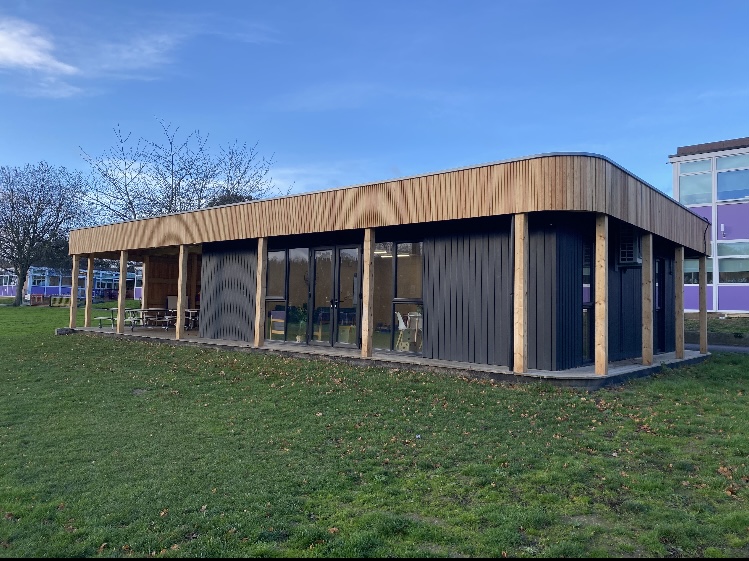
What Schools Can Learn from a Modular Classroom Built Under Pressure
Most school building projects don’t happen in perfect conditions.
They’re shaped by real constraints:
- Limited space
- Tight timelines
- Restricted budgets
- Live learning environments that can’t simply “pause”
The TOPS Day Nursery project on the Isle of Wight is a good example of this reality - not because it was extreme, but because it reflected challenges many schools and nurseries across the UK face every day.
Rather than presenting a traditional challenge → solution → result case study, this article focuses on what other schools can learn from the decisions made under pressure.
The Real-World Constraints Schools Face
This project was shaped by three familiar pressures.
Space
Island locations bring logistical challenges - restricted access, limited delivery windows, and very little room for error.
Many schools across the UK face similar constraints, particularly in built-up or rural areas where space is already at a premium.
Time
The nursery needed a high-quality learning environment delivered quickly, without prolonged disruption to children, staff, or parents.
Traditional construction timelines simply weren’t practical.
Budget
As with most education projects, funding had to be stretched carefully - with no appetite for future maintenance or operational surprises.
These aren’t edge cases.
They’re increasingly common across modular school buildings in the UK.
Why Modular Was Chosen (Not Assumed)
Modular wasn’t selected because it was the default option.
It was chosen because it allowed:
- Greater certainty around delivery timelines
- Reduced on-site construction activity
- Better control over build quality in a challenging location
Just as importantly, it allowed the nursery to stay focused on what mattered most: creating a space that genuinely supports early years learning.
This distinction is key.
Modular works best when it’s used as a planning tool, not a shortcut.
Designing for Children, Not Just Compliance
Despite the logistical challenges of building on an island, the design never became an afterthought.
The nursery was designed with early years development at its heart:
- Bold geometric forms and colourful cladding panels
- A playful, welcoming exterior that feels engaging from the first glance
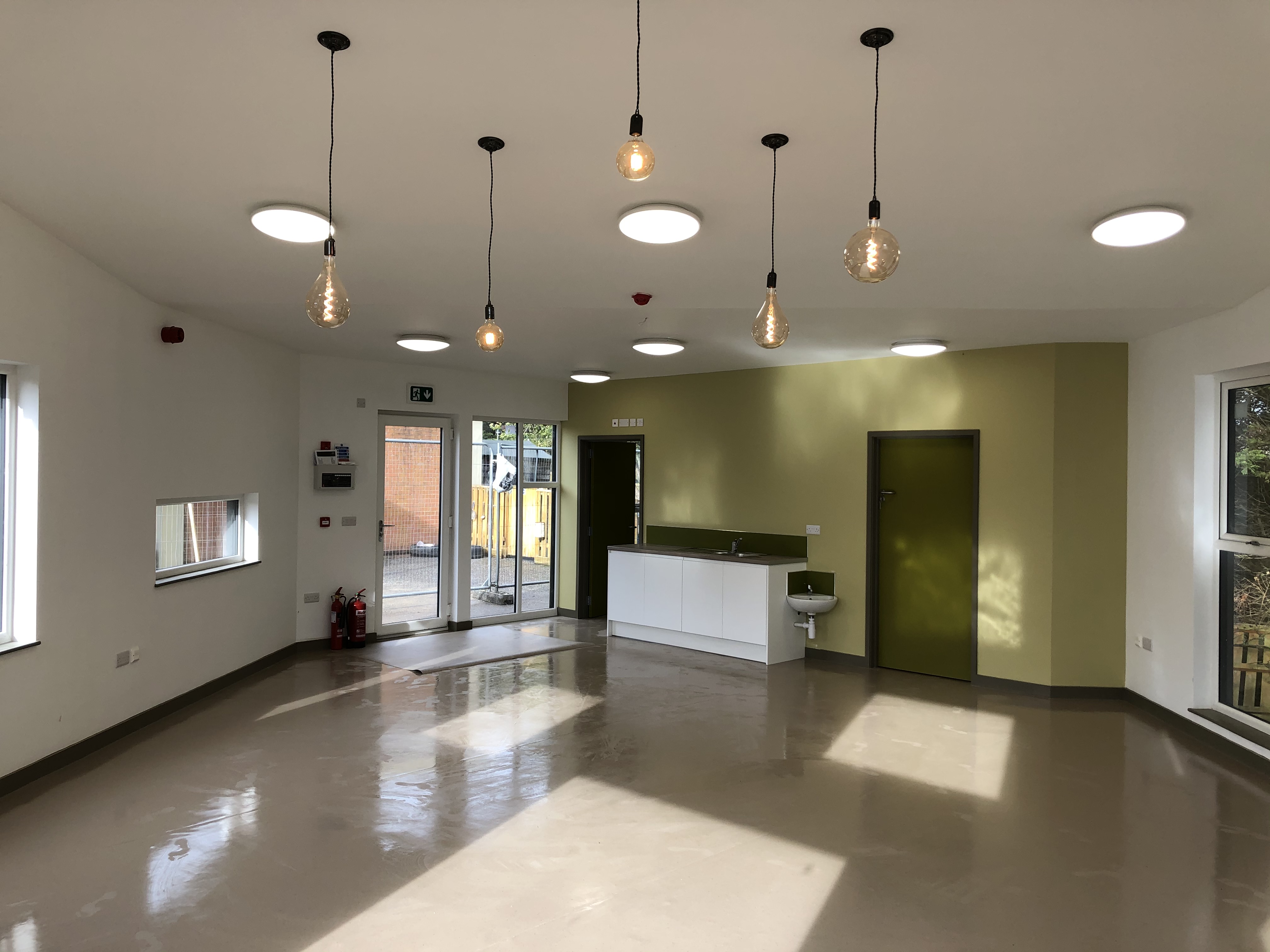
- Bright natural light and soft edges throughout
- Age-appropriate features that support learning, comfort, and safety
And the best part? The benefits that this kind of design has for children's learning.
For schools and nurseries considering eco buildings for schools, this highlights an important point:
good design and practical delivery don’t have to be mutually exclusive.
What Actually Reduced Disruption
Modular buildings are often described as “less disruptive.”
In reality, that only holds true when the process is carefully managed.
In this project, disruption was reduced through:
- Off-site manufacturing
- Short, well-coordinated on-site installation
- Clear sequencing around nursery operations
The lesson here isn’t simply “go modular” - it’s that process matters as much as product.
Eco Decisions That Made a Measurable Difference
Sustainability choices weren’t driven by marketing labels.
They focused on:
- Thermal performance and insulation
- Energy efficiency in day-to-day use
- Durable materials suited to a high-use environment
For schools, this is where eco modular classrooms deliver real value - not just in environmental terms, but in predictable running costs and long-term reliability.
What We’d Recommend to Schools in a Similar Position
Based on this project, several lessons apply to other schools and nurseries:
- Don’t assume modular is always the answer - test it against your constraints, ask yourself these 7 questions before making a decision.
- Treat disruption as a risk to manage, not an inconvenience
- Prioritise operational performance, not just upfront cost
- Work with suppliers who understand education environments, not just buildings
These decisions compound over time - either reducing pressure or creating it.
Key Takeaways
- Modular works best when constraints are acknowledged early
- Eco performance should be judged on outcomes, not claims
- Reduced disruption is a process outcome, not a given
- Good design still matters - especially in early years settings
Ready to kickstart your project?
Get in touch today and let's start talking about how we can support your schools expansion.

Sustainable Modular Buildings for Schools, Nurseries & Community Spaces
From nurseries and classrooms to multi-use community buildings, we design and build sustainable modular buildings across the UK, tailored to each site, built to last, and delivered with minimal disruption.


Explore Our Latest Insights
Discover innovative ideas for educational spaces.